
This post contains affiliate links. If you buy through them, I may earn a commission at no extra cost to you. As an Amazon Associate I earn from qualifying purchases.
The bedside stack has become two stacks. The chair is holding books instead of clothes, which is an improvement of sorts, and your water glass is balancing beside a hardcover. A bedroom can reflect your love of reading without making every surface difficult to use.
This guide focuses on book storage and the small details around it. It is not another reading-chair setup or a shelf-accessory shopping list. Start by deciding which books need to stay within reach and which can live somewhere else.
Photos are styling inspiration. Linked product designs, fabrics and color options may differ; alternatives are described beside the links.
1. Give current reads a smaller home
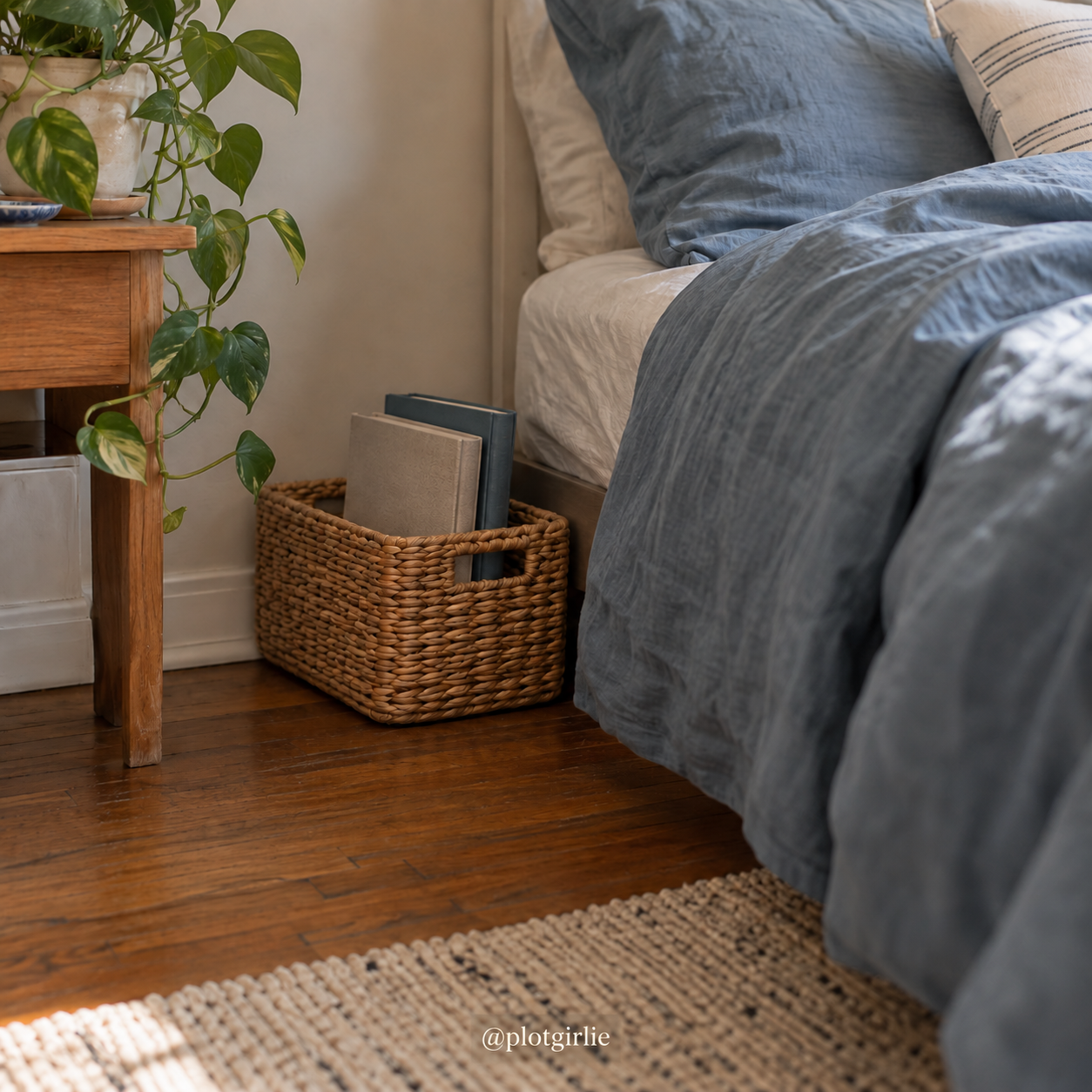
Choose one place for the book you are reading and one you might read next. A section of an existing shelf, a bedside drawer or a basket beside the bed can work. Move the rest of the aspirational stack back to storage. You are not abandoning those books; you are giving your present reading mood some space.
Keep the floor route to the bed clear. If a basket catches your feet or blocks a drawer, it is the wrong location even if it looks lovely.
Divide the stack into reading now, reading next and keeping. The first two need access; the third needs storage. Set a physical limit, such as one shelf segment or one basket, rather than a number that keeps growing whenever a new recommendation appears.
Measure the tallest book, the widest spine and the spot the basket will occupy. Place a cardboard box there for a day before buying storage. If it catches the vacuum, blocks the wardrobe or becomes a dumping ground, try a different location. Small-room solutions need to pass the boring tests.
Give the current stack a home
↗ StorageWorks small seagrass baskets
A small basket option sold as a pair. Measure your largest book and the floor space first.
2. Protect one useful bedside surface
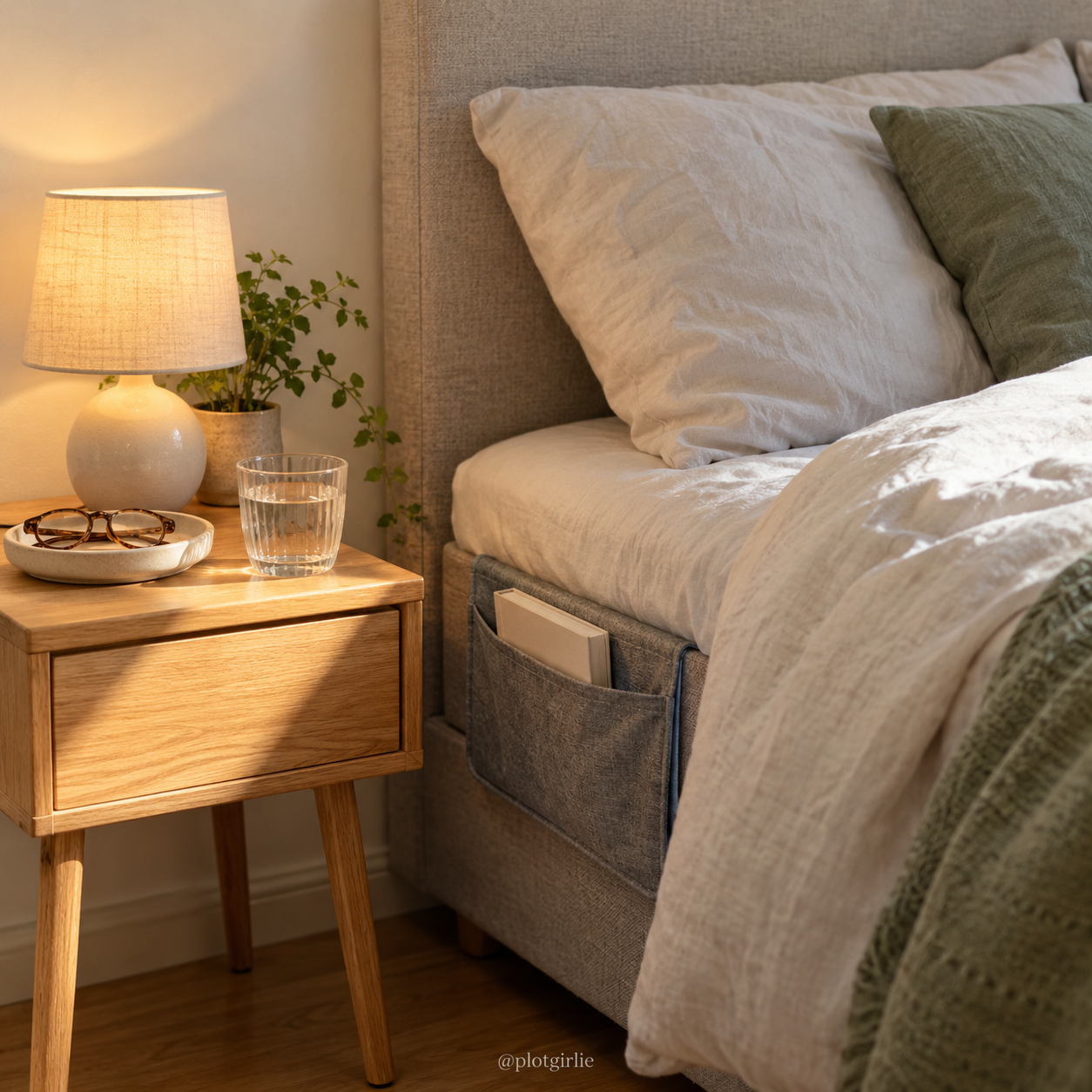
Reserve room for the items you use every night: perhaps a lamp, water and glasses. Put small objects together on an existing dish rather than scattering them among the books. If the table is tiny, use its lower shelf or drawer for the next-read pile.
Before buying a bedside organizer, check how it attaches and whether it fits your bed frame. Pocket organizers that rely on mattress weight or a particular frame shape will not suit every bed.
Arrange the tabletop around your nighttime sequence: switch the light on, set water down, remove glasses, put the book away. Keep those motions easy. A pretty stack that requires three things to be moved every evening will usually migrate to the floor.
A bedside pocket can free a surface, but attachment matters. A rail-mounted caddy is different from a flap tucked under the mattress. Choose the version your bed supports, check any weight limit and keep its pockets clear of moving bed mechanisms. It is a storage option, not a replacement for a stable drinks table.
Free up the bedside surface
↗ Bedside Caddy, Table Cabinet Storage Organizer, 4 Pockets
↗ Lilithye rail-mounted bedside caddy
The second version attaches to suitable bed rails with straps. It is an alternative to the mattress-flap organizer in the photo.
3. Separate storage from display
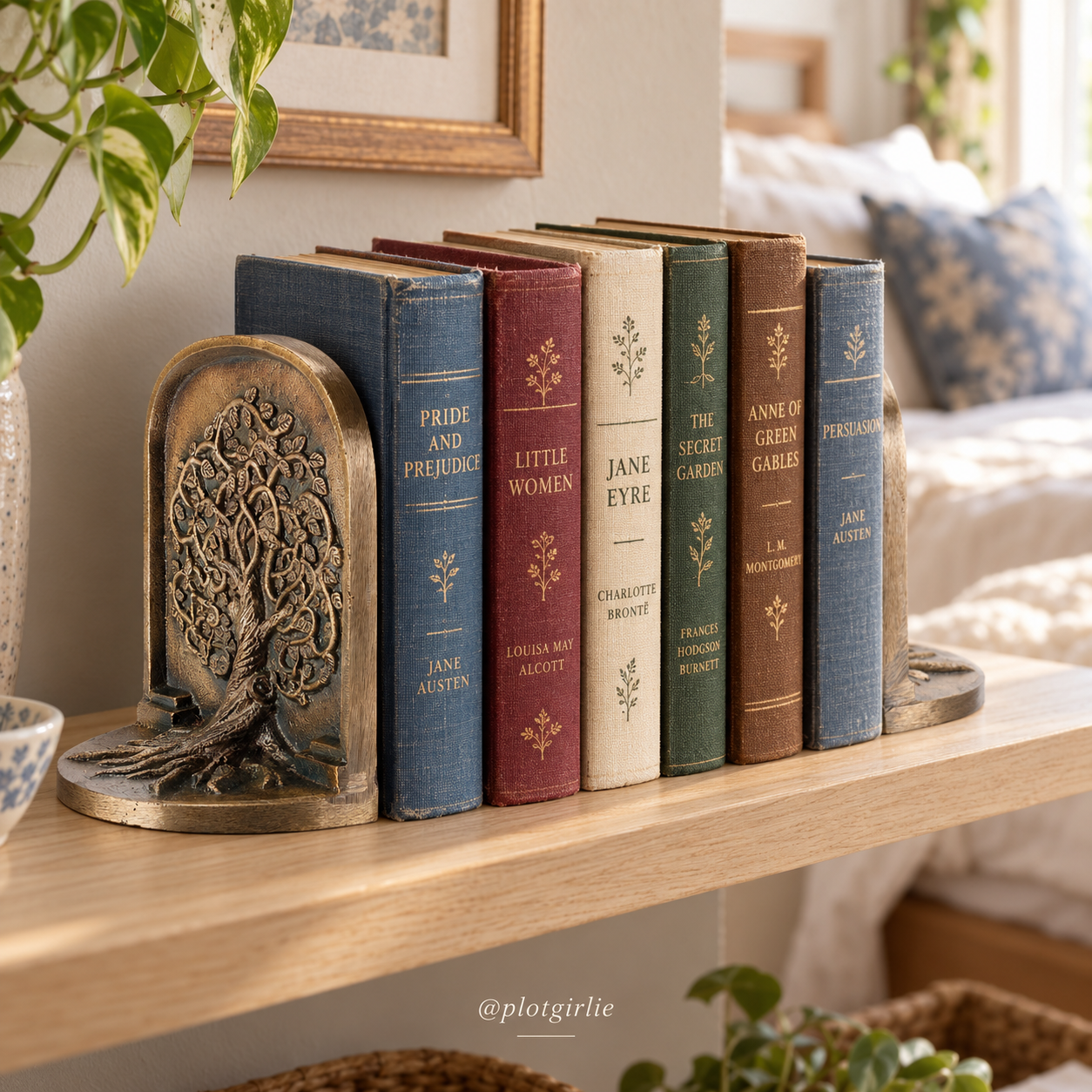
Not every book needs to face outward. Keep most upright and easy to retrieve, then choose a small group to display by theme or cover color. Change that group when your mood changes instead of turning the whole room into a fixed arrangement.
Measure your largest books before choosing storage. Tall hardcovers often exceed the depth of decorative ledges. Follow shelf load limits and secure furniture according to its instructions; avoid heavy stacks above your pillow.
Group books by the way you retrieve them: unread fiction together, reference books together, favorites where you can reach them. Color grouping is optional. If you keep searching for titles, use author or genre order and let the mixed spines provide the decoration.
Leave enough space to take one book out without pulling the whole row forward. Bookends should support the actual height and weight of the row. Start with a short group and avoid balancing decorative objects on loose horizontal stacks, especially where you sit or sleep.
Keep the row standing
↗ CRAFTSMAN ROAD Tree of Life brass-tone bookends
A decorative alternative to the plain bookends shown. Check their height and base against the books you plan to support.
4. Add color through one existing textile

Try a dusty-blue pillowcase, a plum throw or a patterned cushion cover alongside neutral bedding. One clear accent can connect the books to the room without buying a matching set. Repeat a color from a favorite cover in a textile you already have.
If the room feels busy, leave more plain fabric visible rather than adding more decorative objects. A washable cover is often easier to live with than a delicate cushion you are afraid to touch.
Borrow a color from the room before adding another. Dusty blue can repeat a cover, plum can echo a print and a warm brown can connect the wood furniture. Keep the bigger fabric areas quiet if the shelf already has plenty of mixed spines.
A cover-only listing does not include the cushion insert. Measure what you have, then read the fastening and care details. If you want the bed to feel calmer, fold the existing throw over the foot and leave one cushion instead of arranging a row you remove every night.
Bring in one quiet color
↗ MIULEE 18-inch chenille cushion covers
Cover-only option. Check the selected color and size on the listing; the current product title shows navy rather than the dusty blue in the inspiration photo.
5. Make the reading light practical

Position your existing lamp so the page is lit without shining directly into your eyes. Test it while sitting in the position you use to read. A photograph taken during the day will not tell you whether the lamp works at night.
If replacing it later, compare size, adjustability, switch position and bulb compatibility. A rechargeable lamp may be convenient, but check its stated runtime at the brightness you intend to use.
Test the light from your reading position, not from the doorway. Move it until the page is easy to see without a bright reflection on glossy paper. A clip-on light may suit shared rooms because you can aim it at your book, but check the clip depth and controls.
Put the switch where you can reach it without sitting up awkwardly, and give a charging cable a tidy route if the lamp needs one. A lamp can look lovely on a shelf and still be annoying at bedtime. The useful details are the ones you notice when the rest of the room is dark.
Light the page, not the whole room
↗ Adjustable clip-on book reading light
Compare the clip and controls with the way you read. This is a product option, not a personal testing claim.
A fifteen-minute bedroom edit
Spend five minutes returning finished books to storage, five choosing the current and next read, and five clearing the bedside surface. Open the drawer, walk to the bed and reach for the lamp. These tiny checks tell you whether the arrangement works before you decorate it.
Choose the next change by the problem
If books still sit on the floor, solve capacity before adding ornaments. If the table is crowded, change the storage position. If the room feels visually busy, reduce the display group and leave more plain bedding visible. If reading is awkward, adjust the light before buying another cushion.
What works in a rental?
Start with freestanding storage or organizers suited to your furniture. If you want to mount a shelf, check the tenancy rules and the wall requirements first. A new ledge is not a shortcut around limited space if it is too shallow for the books you own.
Keep a small amount of empty space in the arrangement. It lets a new library book arrive without starting another bedside tower, and gives the room room to breathe.


Leave a comment