This post contains affiliate links. If you buy through them, I may earn a commission at no extra cost to you. As an Amazon Associate I earn from qualifying purchases.
Some evenings I want to make something with my hands, but I do not want to become a whole new person with a craft room. I want a small project, a little quiet and a stopping point before the tea goes cold.
These screen-free evening hobbies are for that gap between “I am bored of scrolling” and “I cannot face a complicated tutorial.” Choose by the energy you have tonight, not by the version of yourself who saved forty ambitious projects last Sunday.
Which hobby fits tonight?
| Hobby | Energy | First session | Put-away plan |
|---|---|---|---|
| Embroidery | Some focus | Learn one stitch | Hoop and thread in a pouch |
| Pencil sketching | Low to moderate | Draw one ordinary object | Close the notebook |
| Watercolor | Moderate | Mix three colors | Rinse, dry, close the paint box |
| Puzzle | Moderate | Sort a small group of pieces | Use a measured board or a box |
| Memory notebook | Low | Keep one scrap and one sentence | Envelope inside the notebook |
Give yourself fifteen or twenty minutes to begin. That is a starting window, not a promise that you will finish a project. If setting it up takes longer than doing it, simplify the setup.
1. Embroidery: one small patch of progress
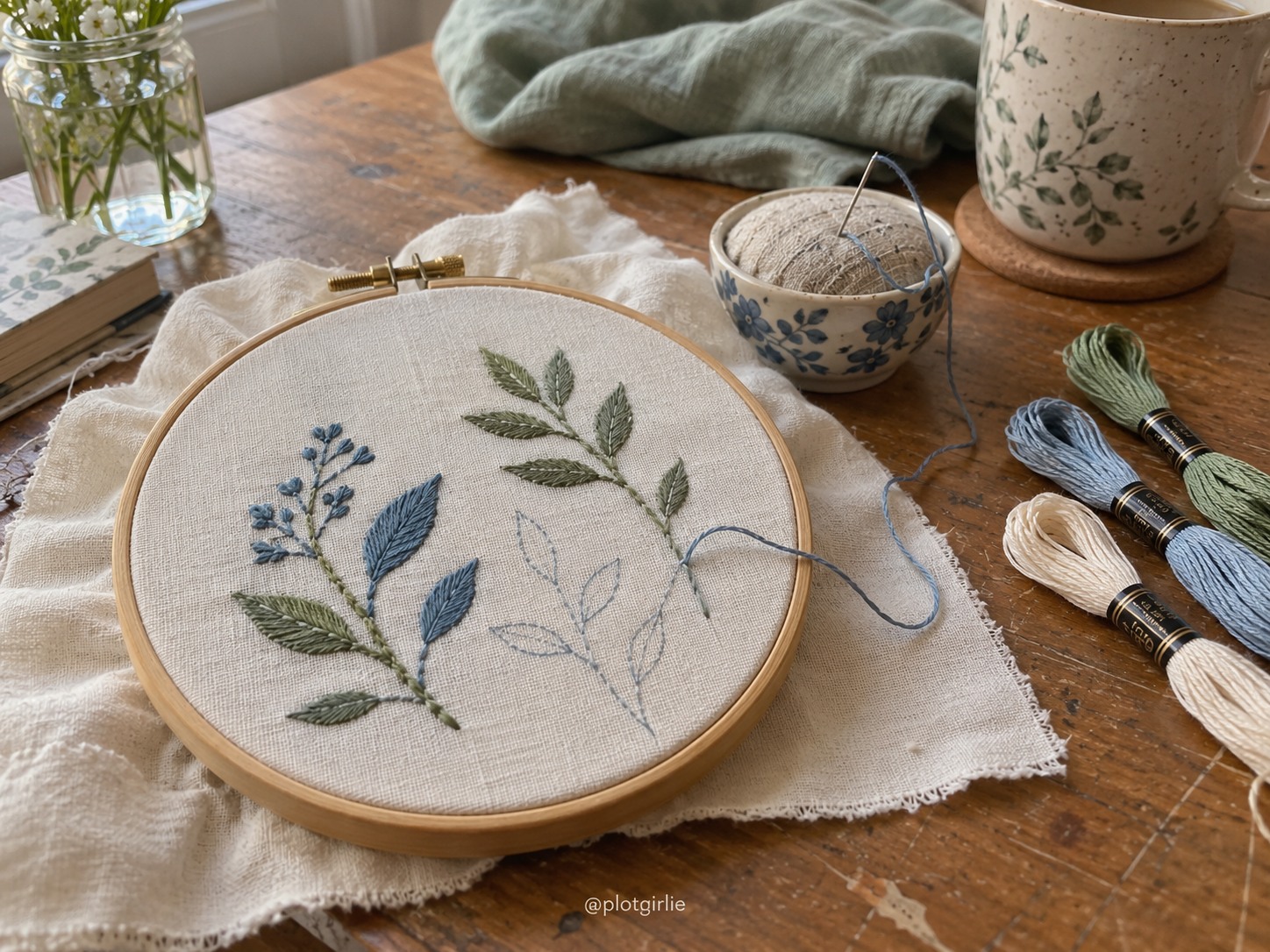
A stamped design takes away the blank-page decision. Pick one leaf, petal or short line rather than trying to finish the picture. One stitch repeated slowly is enough for a first evening; a design with several different stitches can wait until the movement feels familiar.
Work at a table or in a seat with good light. Put a small dish beside you for loose thread and keep the needle accounted for before packing away, especially around pets or children. The little ritual of gathering everything up matters as much as the finished flower.
Try before buying: practise a running stitch on a fabric scrap with sewing supplies you already own. If you enjoy the process, a starter kit saves the trouble of choosing every component separately.
Start with a small stitch
2. Sketching: draw the mug, not a masterpiece
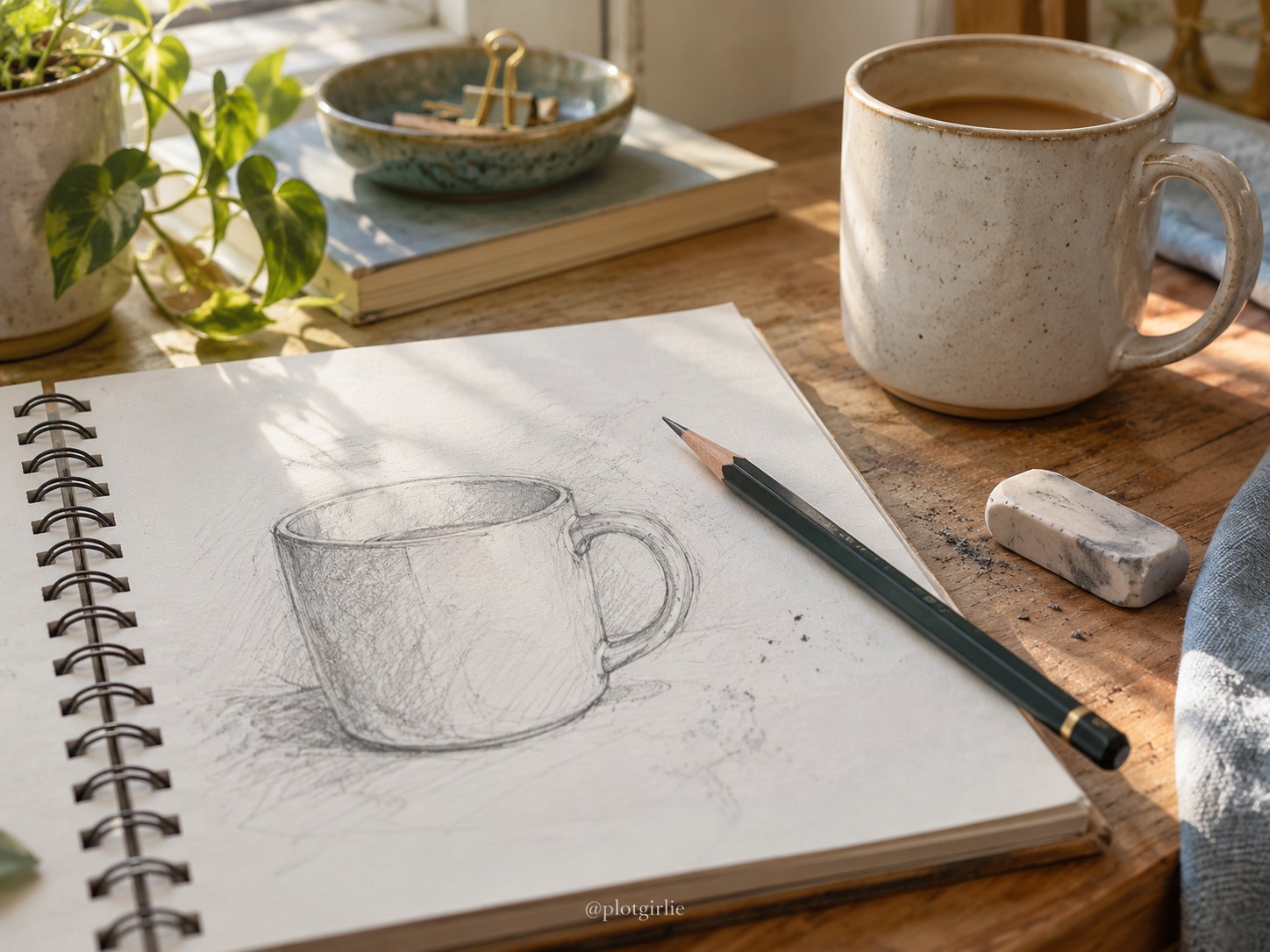
Choose something already on the table: a cup, a crumpled receipt, your keys. Draw its outline for five minutes, then add only the darkest areas. Date the page. You are making a record of looking closely, not auditioning for an illustration career.
When perfection starts making the page feel expensive, draw the same object three times in small boxes. The second version will usually reveal something you missed in the first. A pencil and the back of an envelope work perfectly well for this experiment.
Make it easier: keep a short list of objects inside the cover. “Mug, window, shoe, plant” removes the need to find inspiration after dinner. A watercolor journal can double as an informal sketchbook if you want one place for both hobbies; expect a more textured surface than smooth drawing paper.
3. Watercolor: a page of colors counts
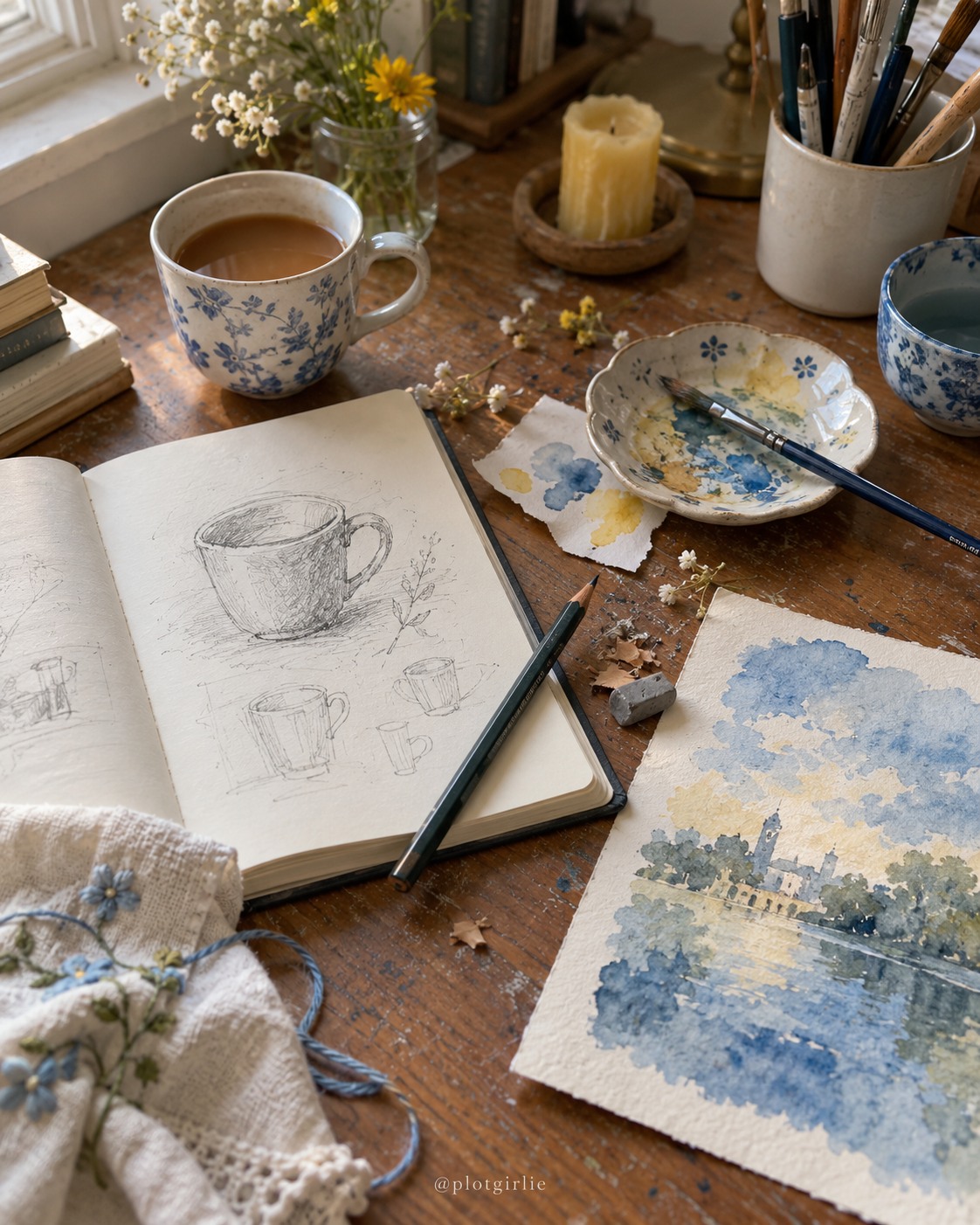
You do not need to begin with a landscape. Paint three small washes, let them dry, then label the mixtures. Try one blue with two different amounts of water, or see which green you can make from the colors you own. A sheet of experiments is a finished activity in its own right.
Use paper intended for watercolor so the first attempt is not mostly a fight with buckling paper. Keep rinse water separate from your drink, protect the table and leave time to clean the brush. A pocket paint box makes storage simpler; it does not remove the need for paper and water.
For a tired evening: stop at swatches. On a more curious evening, paint one imperfect leaf beside them. Let the paint dry before closing the page or packing the kit.
Build a compact drawing-and-painting kit
- ↗ Strathmore Visual Journal watercolor paper, 5.5 × 8 inches
- ↗ Winsor & Newton Cotman Sketchers’ Pocket Set
4. A puzzle: choose by footprint as well as piece count
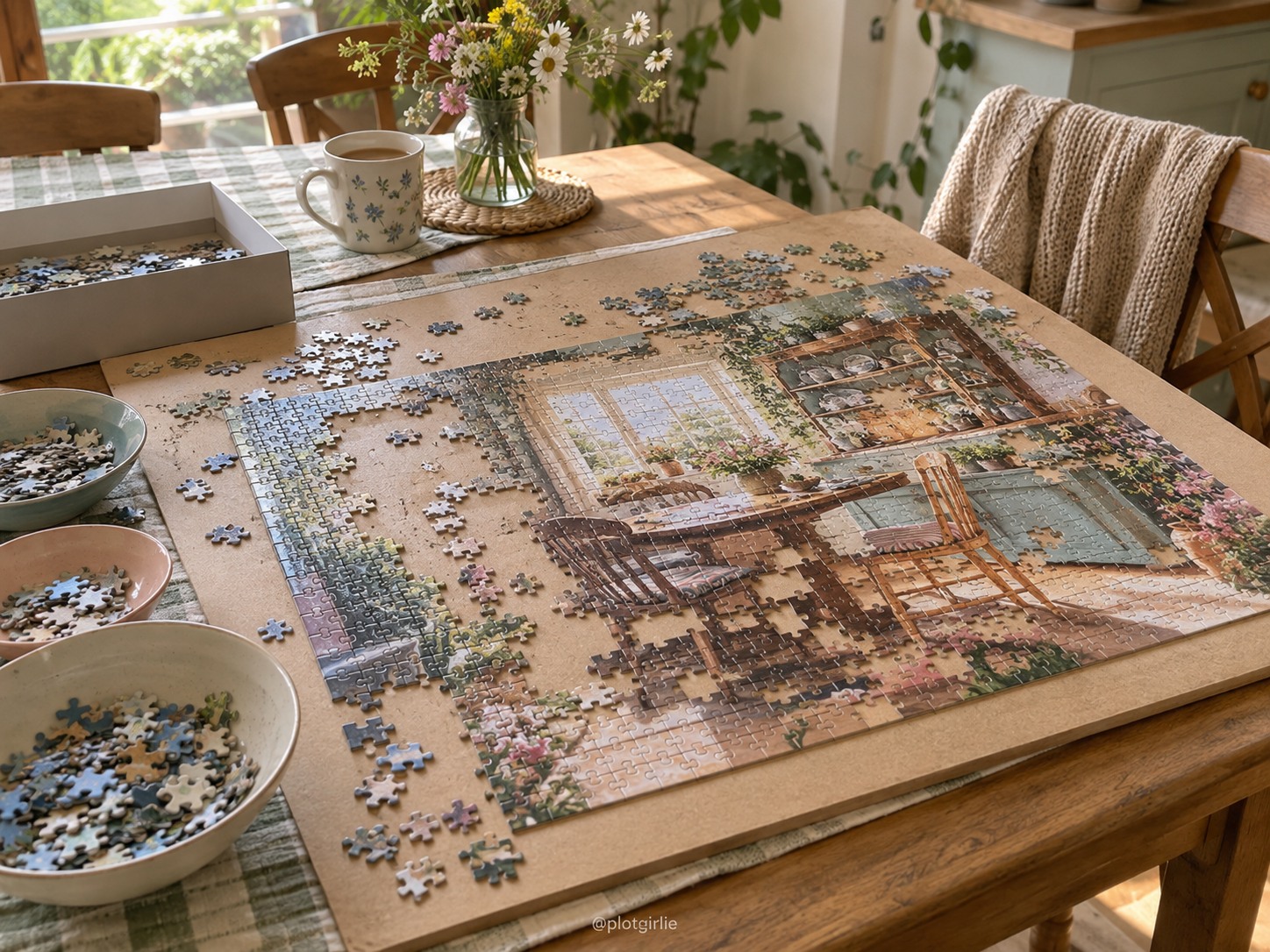
A puzzle is lovely until it occupies the only place you can eat breakfast. Before choosing one, measure where it will live between sessions. Large-format pieces can make a 500-piece puzzle surprisingly wide: the Cozy Retreat option below finishes at about 70 × 50 cm.
Start by turning pieces over or sorting one color group. You can stop there. If your table needs to be cleared nightly, use a board that fits the finished puzzle and can be stored safely, or choose a smaller puzzle instead. Do not buy a mat without checking its usable dimensions.
Easy alternative: borrow a puzzle or swap with a friend. A missing piece in a borrowed puzzle is mildly annoying; discovering you dislike puzzles after buying three is a longer commitment.
Choose a puzzle for several quiet evenings
- ↗ Ravensburger Cozy Retreat 500-piece puzzle
- ↗ Garden Dog Jigsaw Puzzle 500 Pieces for Adults
- ↗ Galison – Beside the Sea 500 Piece Jigsaw Puzzle for Adults
5. A memory notebook: one ordinary thing worth keeping
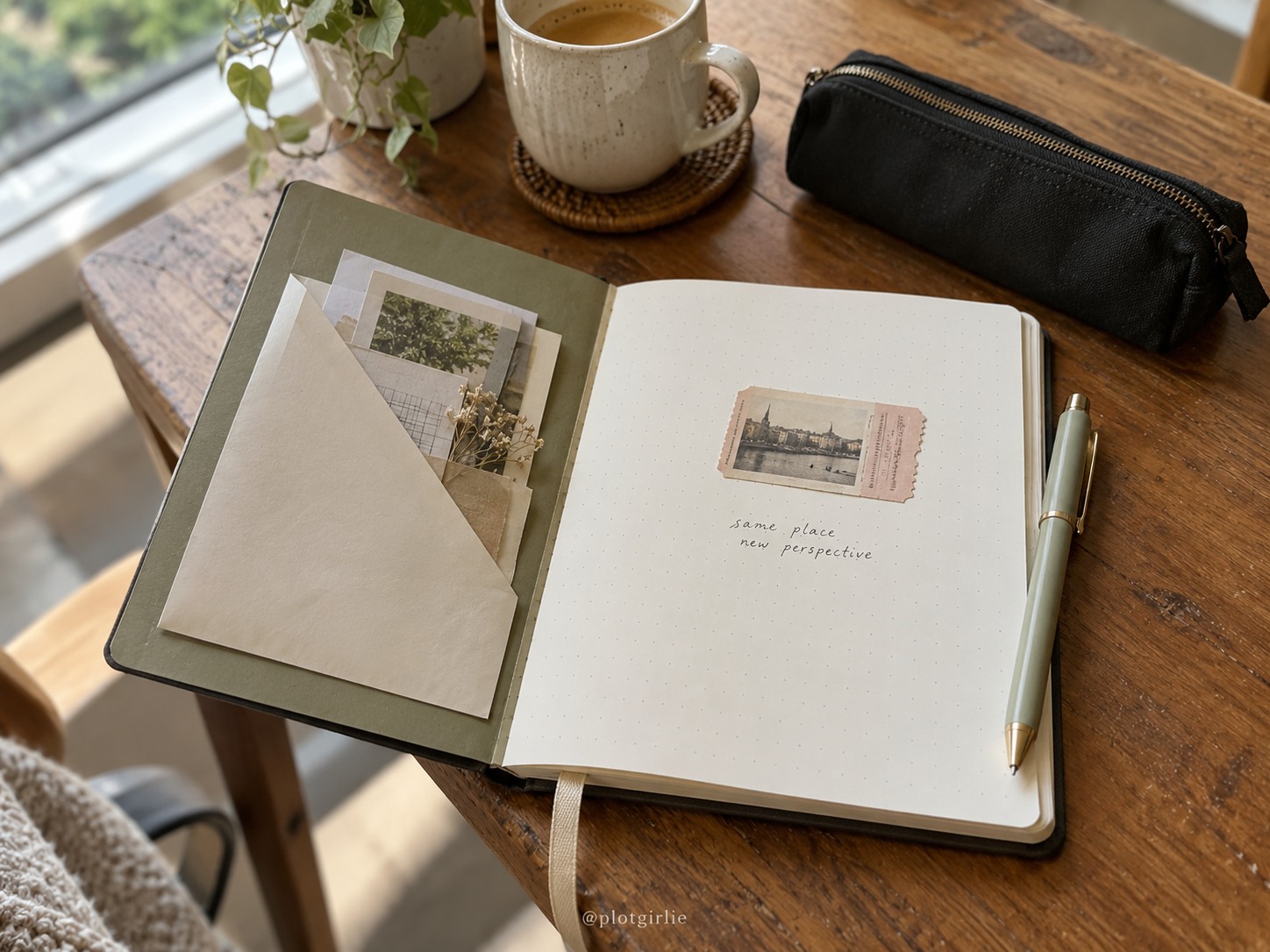
Keep today’s receipt, a wrapper from something you enjoyed or a sentence about the walk home. Add the date and one detail that would otherwise disappear: the weather, the song playing or the joke that made you laugh. A memory notebook does not need a dramatic day to justify a page.
An envelope tucked into an old notebook is a useful first system. Once a week, choose one scrap and write around it. Leave the others loose until you know which ones matter. Remove personal information from receipts, and copy fragile or important originals rather than gluing them down.
Keep the little bits together
The easiest hobby is the one you can restart
Leave yourself a next step before putting things away: the next leaf to stitch, the object to sketch or the pieces you want to sort. Keep the supplies in one small place. You should not need to remember what you were doing in order to return to it.
Try one hobby twice before adding another kit. If you only enjoy the shopping stage, borrow supplies or use what you have for a week. Your evenings are allowed to be interesting without becoming another collection to manage.


Leave a comment