
This post contains affiliate links. If you buy through them, I may earn a commission at no extra cost to you. As an Amazon Associate I earn from qualifying purchases.
I like the idea of keeping a journal. I am less enthusiastic about sitting in front of a blank page and being asked to summarize my entire inner life. A memory journal gives me something smaller to start with: a ticket, a photo, a sentence, the ordinary afternoon I would otherwise forget.
This is for girls who want to keep the little days but do not know what to write. You can use a notebook you already own. You can miss weeks. You can leave a page unfinished and turn to the next one.
Begin with this three-part page
Date + one thing you kept + two sentences. Place a scrap on the page, then write what happened and one detail the scrap cannot tell you. A café receipt records a purchase; your sentence records the rain outside or the friend who made you laugh.
Example entry, invented as a starting point: “Saturday, 12 October. Went out for a coffee and stayed for three chapters. It was raining when I left, but the walk home smelled like wet leaves.” You do not need to sound literary. Write the detail your future self would like to remember.
Choose a notebook you want to open
1. The ordinary-afternoon page
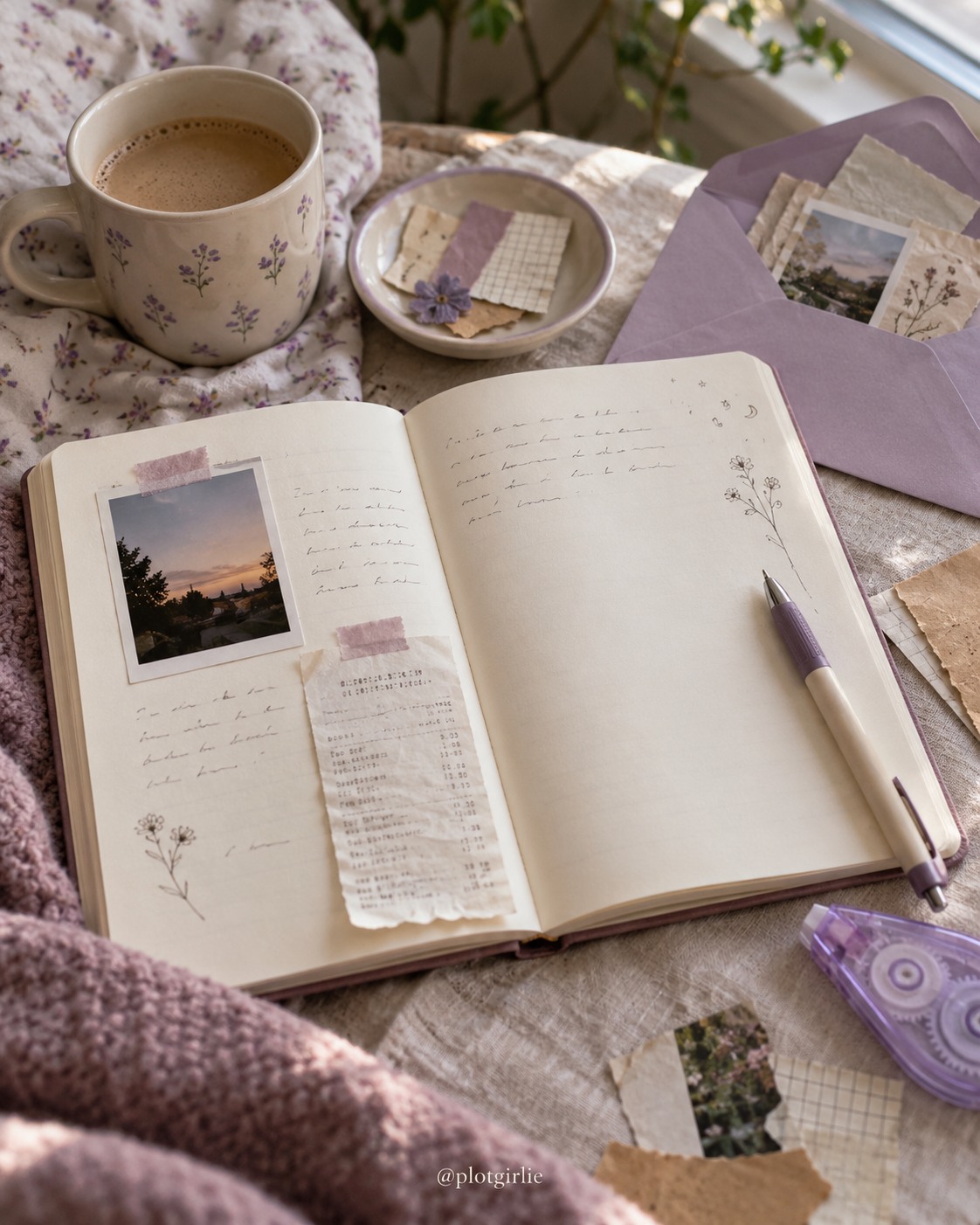
Keep a receipt, bus ticket or small paper wrapper. Add where you went, why you chose it and one moment you noticed. You can leave most of the page empty. A short record of an ordinary afternoon is more useful than a decorated page you never finish.
Receipts can contain identifying details, and some fade over time. Crop or cover information you do not want to keep visible, or use a copy and transcribe the important date. Do not rely on the receipt to preserve the memory by itself.
Prompt: “The part I would have forgotten is…” If there is nothing worth keeping physically, draw a little box and write the detail inside it.
2. The reading-life page
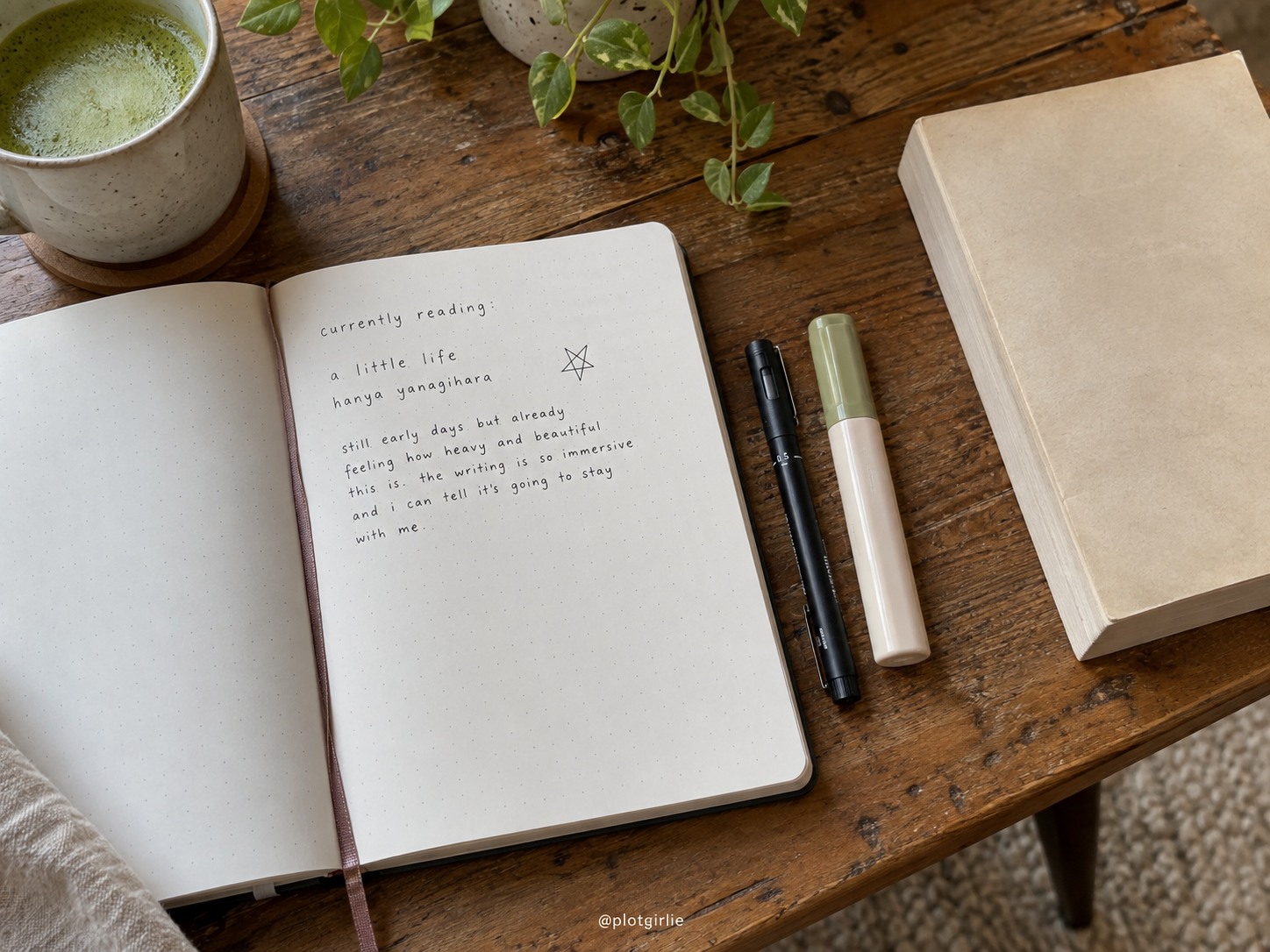
Write the book title, when you finished it and how it found you. Instead of forcing a polished review, answer one specific question: “What feeling did I want more of?” or “Who would I lend this to?” A single sentence can capture more than a score.
You might add a library slip, a sketch of the cover or a small printed image if you have permission to use it. Keep notes spoiler-light if you share pages online. Your private notebook can be messy; the public photograph deserves a quick privacy check.
Add words without a full stationery collection
3. The tiny outing page
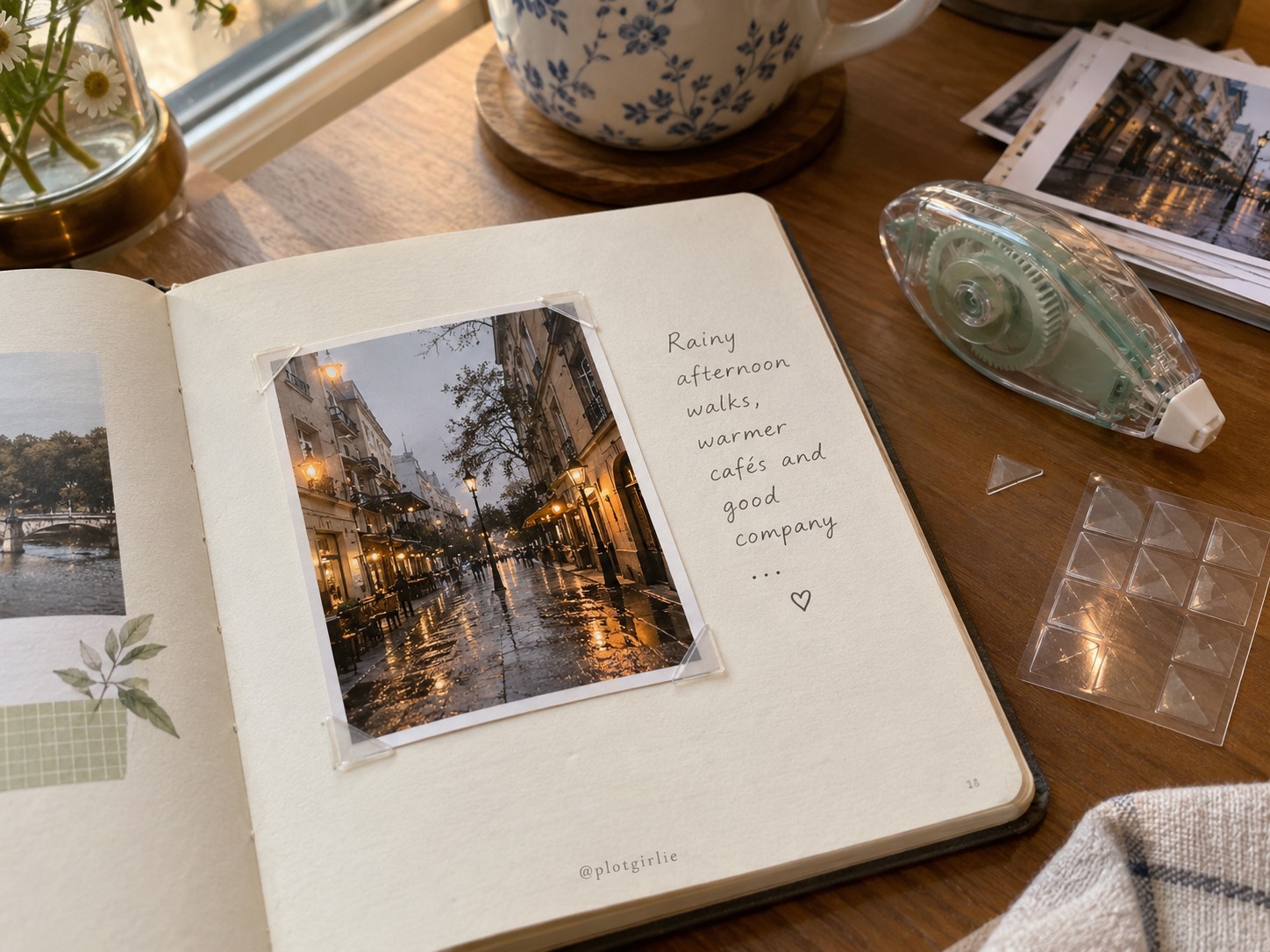
Keep one photo and write what was happening just outside the frame: the crowded table, the delayed train, the conversation on the walk. The picture records what something looked like; the note records why you cared.
Photo corners are useful when you want to hold a print without gluing its back. Permanent adhesive is better reserved for replaceable copies and ordinary scraps. Neither option makes every combination of paper, ink and photograph archival, so keep irreplaceable originals separately.
Keep photos and scraps in place
4. The month-in-small-things page
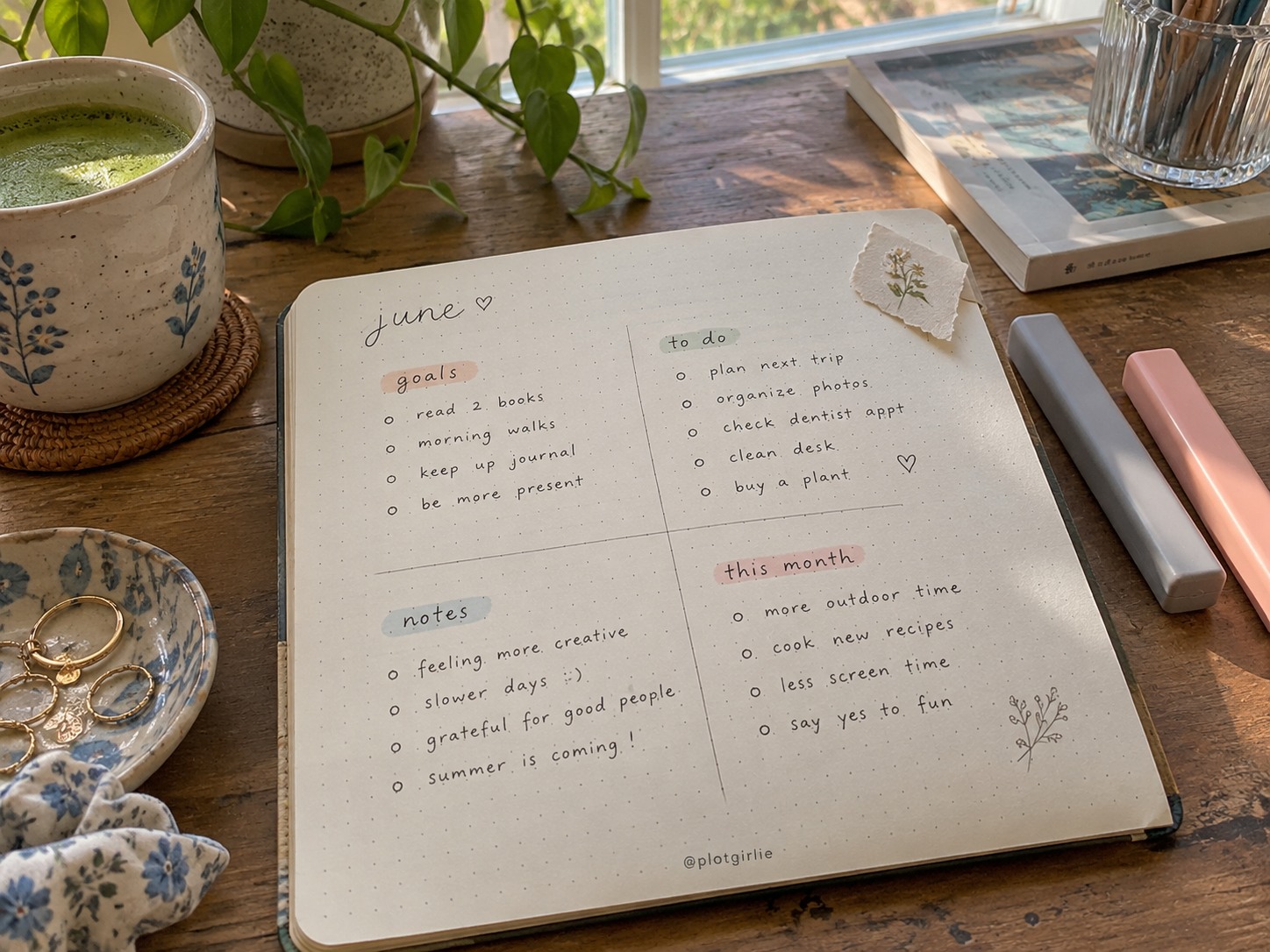
Make four little headings: “Read”, “Listened to”, “Went” and “Kept thinking about”. Put one or two details beneath each. This is a good page for a month that felt uneventful because it does not ask for highlights that were never there.
If you want a visual detail, use one small color swatch, an envelope edge or a piece of packaging. Repeating a simple layout is fine. The memories should be different; the border does not need to be reinvented every time.
Prompt: “Something I would not call a milestone, but want to remember…” It could be finding an easy dinner, borrowing a good book or finally seeing a friend after conflicting schedules.
5. The day you did not take a photo
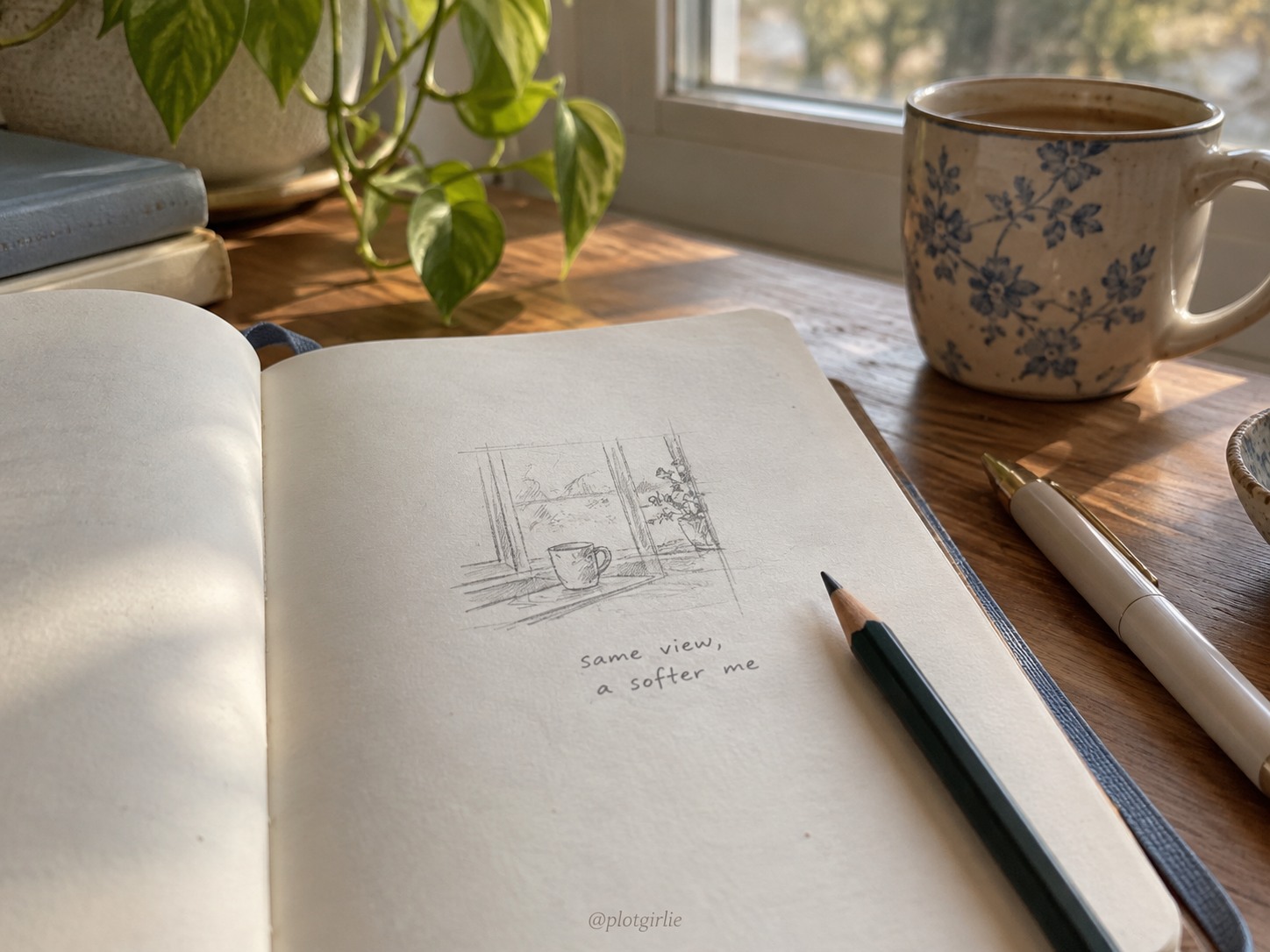
Draw the shape of the table, jot down the meal or list three things you heard. This page is for the days that left no souvenir. A journal does not need physical proof before a memory counts.
Try this sentence frame: “I was at ___. I noticed ___. I want to remember ___.” If that is all you write, the page has done its job. You can return later, but you do not owe the page a second visit.
A small kit, not a stationery department
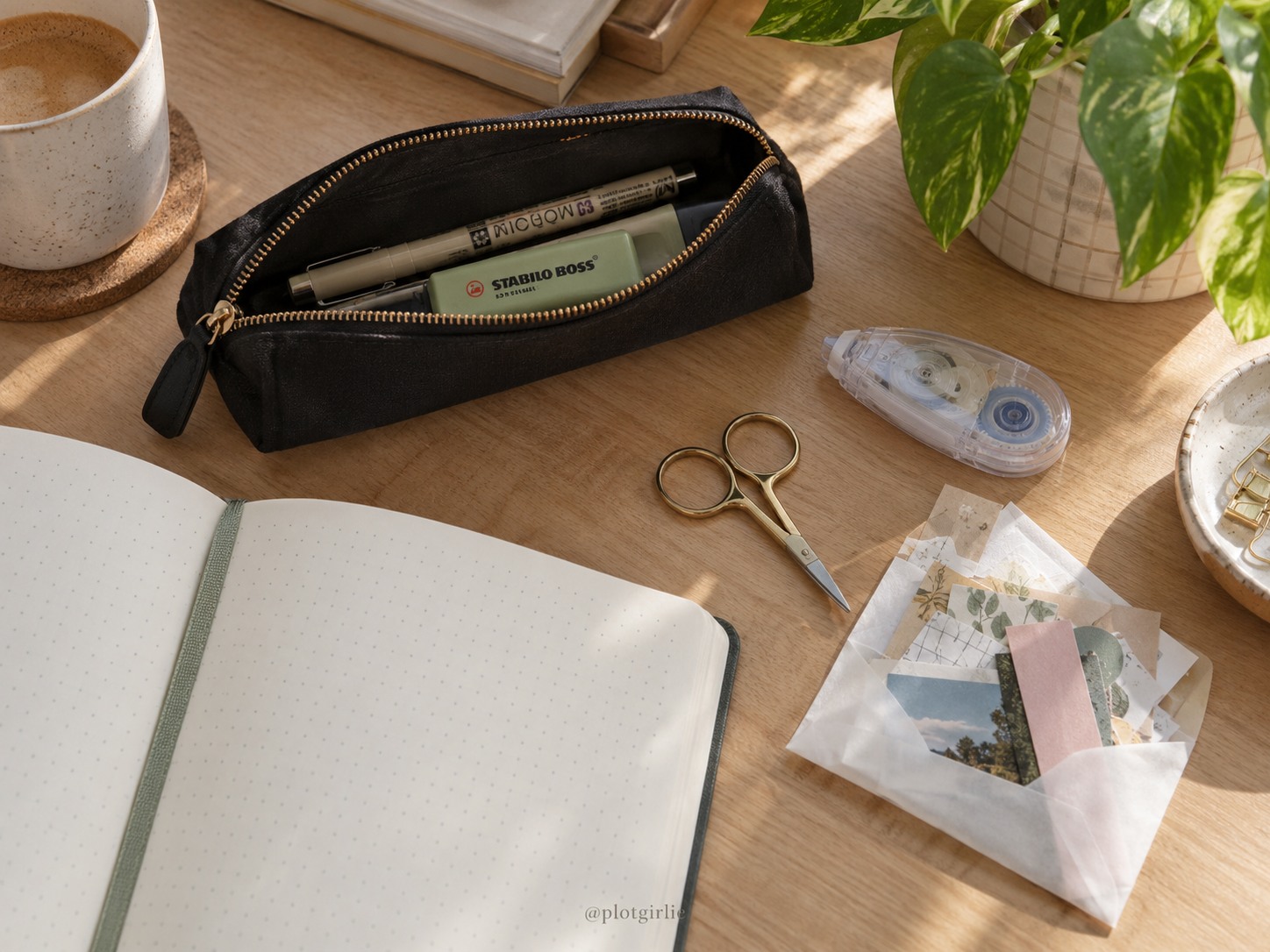
Keep the notebook, one pen, adhesive and a few scraps together. Scissors can stay at your home desk. A small pouch is useful for tools; an envelope inside the back cover is enough for loose paper. When the envelope fills up, choose what to keep rather than starting a second unsorted pile.
Test pens and highlighters on a back page for show-through. Dotted notebook paper is useful for writing and layouts, but it is not automatically suitable for wet paint. If you want watercolor pages, use watercolor paper or make the little painting separately and attach it after drying.
Make the kit easy to put away
When you fall behind, begin with today
Do not make yourself reconstruct every missing week before you are allowed to write again. Date a new page and keep one thing from the present. If you remember an older moment later, give it its own page and note that you are writing from memory.
You can also keep a running list of scraps with one sentence beside each, then assemble pages when you feel like it. Some girls enjoy the decorating; some want the words. Both are valid ways to keep a record of a life that is still happening.
Your first page can take five minutes
Choose one ordinary moment from this week. Write the date, two sentences and a detail that feels yours. Add a scrap only if you want to. Then close the notebook before you start comparing it with someone else’s finished spread.


Leave a comment